Product Design · Form Exploration
Deco Glow
An Art Deco inspired candle holder exploring symmetry, geometric form and contrasting materials.
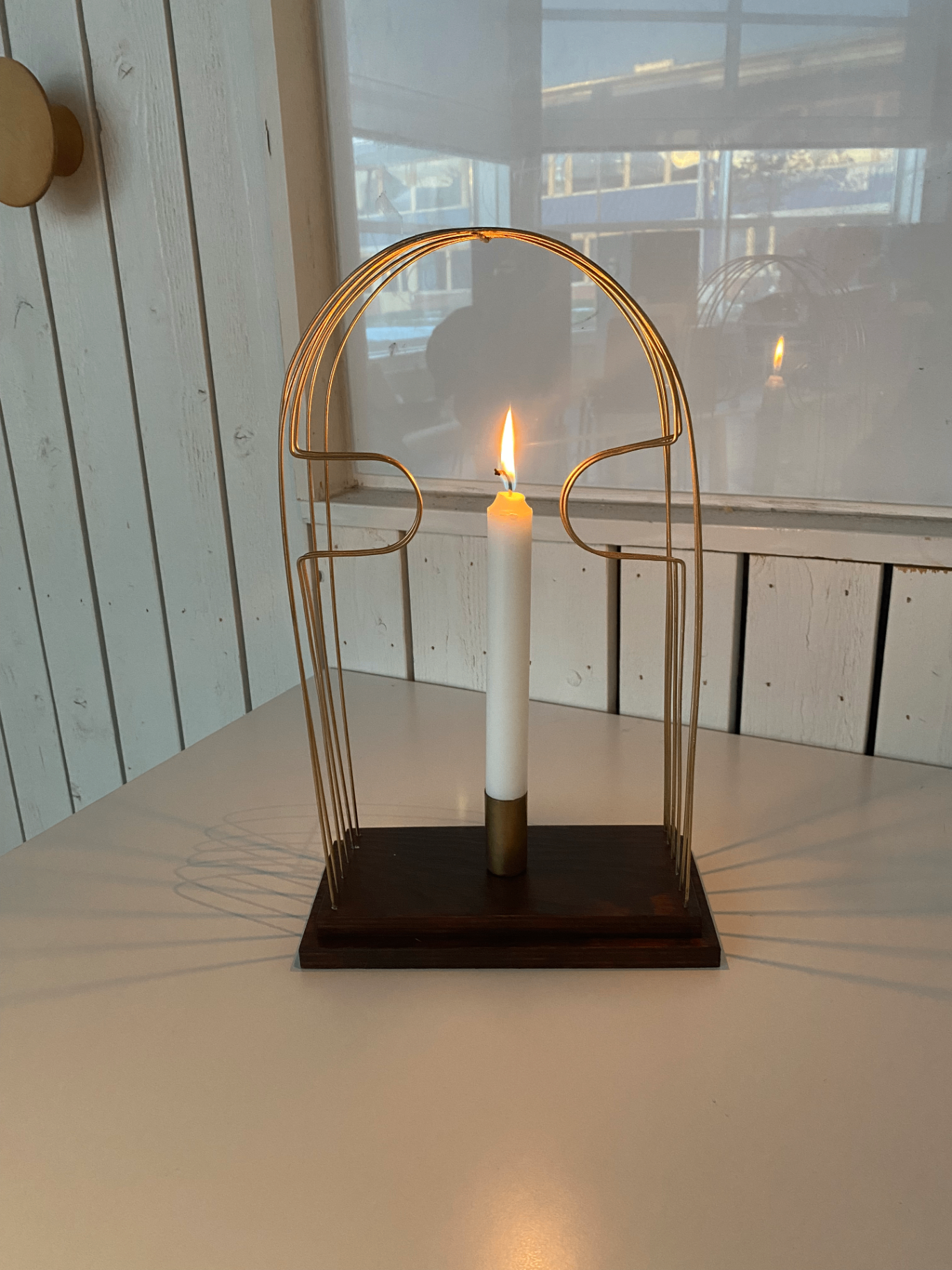
Final candle holder combining a stepped wooden base with a symmetrical metal structure.
- Project type
- Product Design · Form Exploration
- Course
- Design: Theory and Practice
- Year of study
- Year 2 of 5
- Duration
- Team
- Team of two
- My role
- Design research, concept development, material selection, prototyping and construction
- Tools & methods
- Design history research · Form exploration · Material studies · Physical prototyping · Woodworking · Metal forming
- Prototype
- Full scale Art Deco inspired candle holder
The challenge
The task was to translate the visual language of a historical design period into a new physical product. We worked with Art Deco and focused on its geometric forms, symmetry, stepped structures and contrast between dark wood and reflective metal. We chose to design a candle holder because the simple function allowed the form, materials and historical references to become the main focus of the project.
Design inspiration
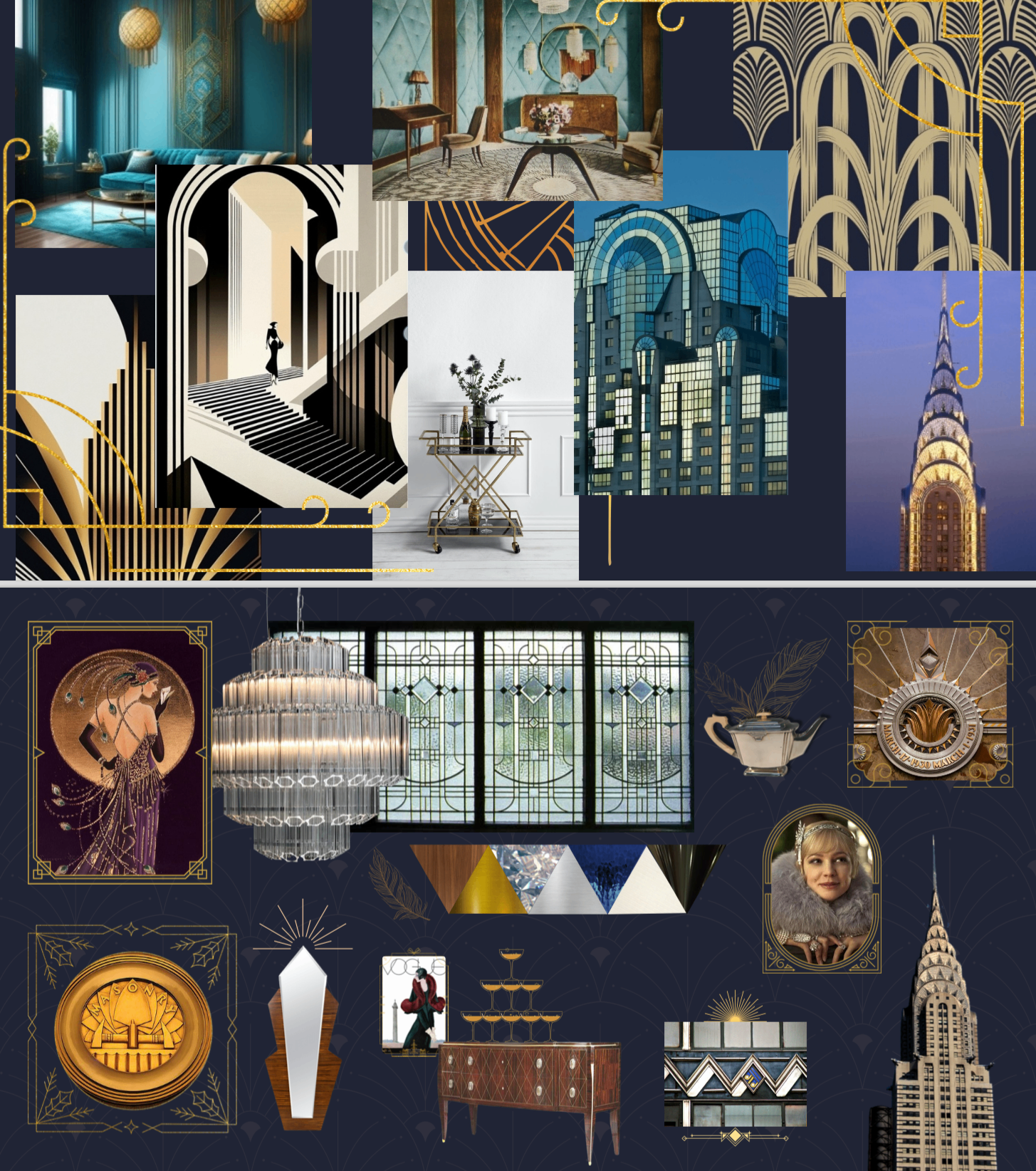
The design was influenced by the strong geometry and decorative structure associated with Art Deco. The stepped wooden base was inspired by the shape of the Empire State Building. The metal structure was arranged symmetrically around the candle to create a balanced silhouette. The curved shapes were inspired by the rounded and decorative forms found in Art Deco architecture and interiors.
Material choices
- 1
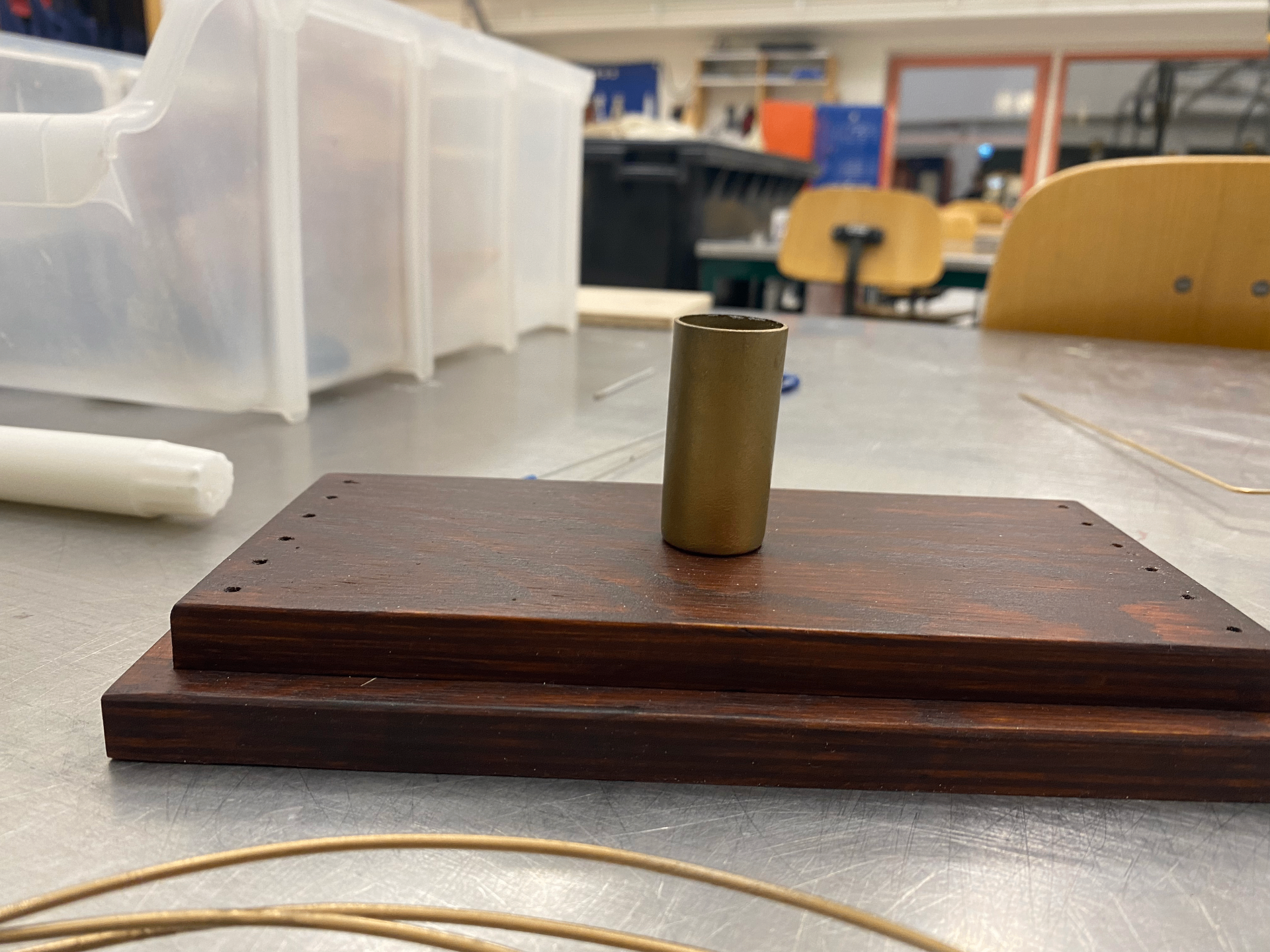
The base was made from plywood and stained to create the appearance of a darker wood such as walnut, which was commonly used during the Art Deco period.
- 2
Aluminium was chosen for the metal structure to reference the chrome and silver surfaces associated with the style. The contrast between the dark base, warm candlelight and metallic frame became an important part of the final expression.
Construction process
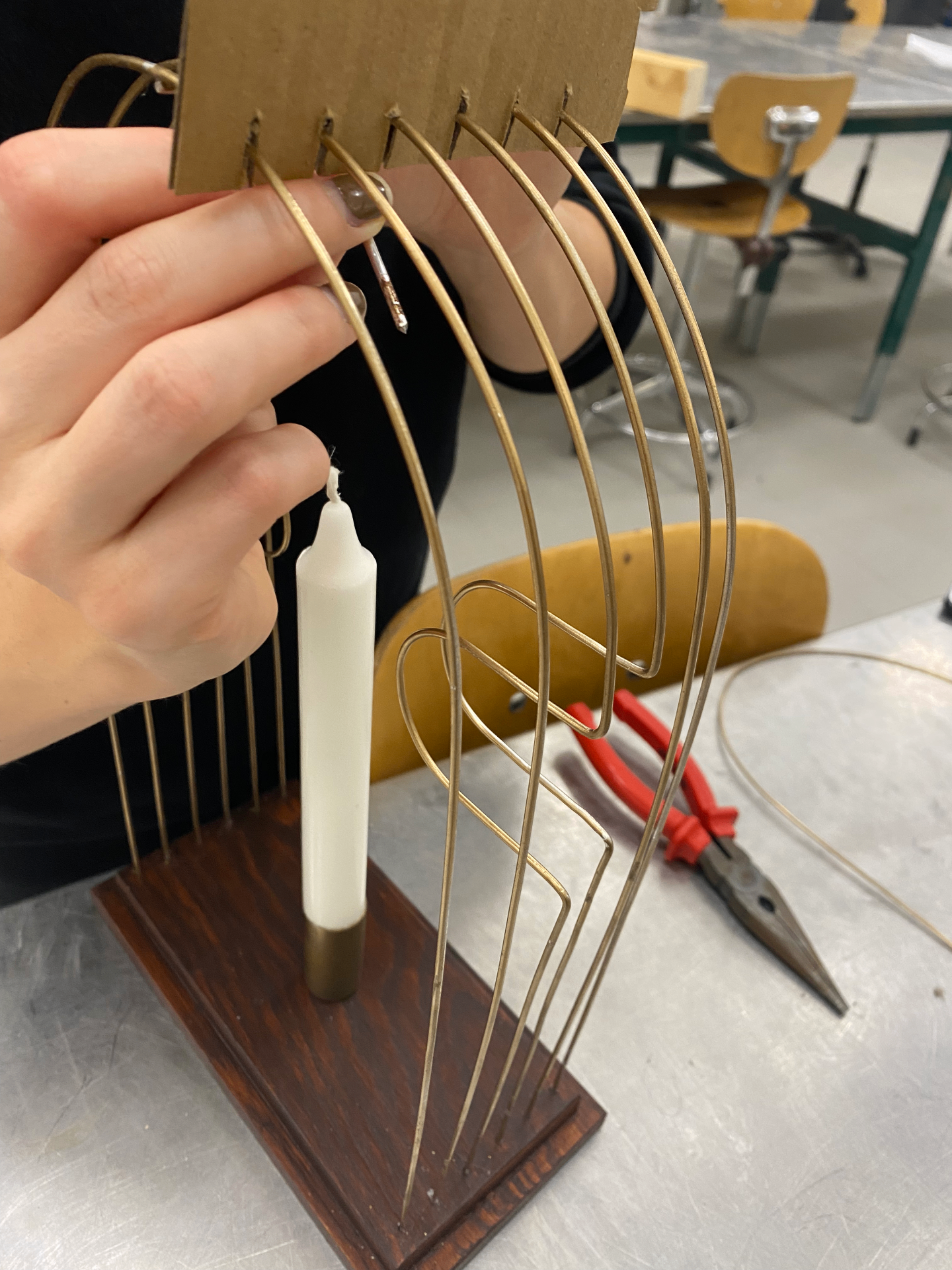
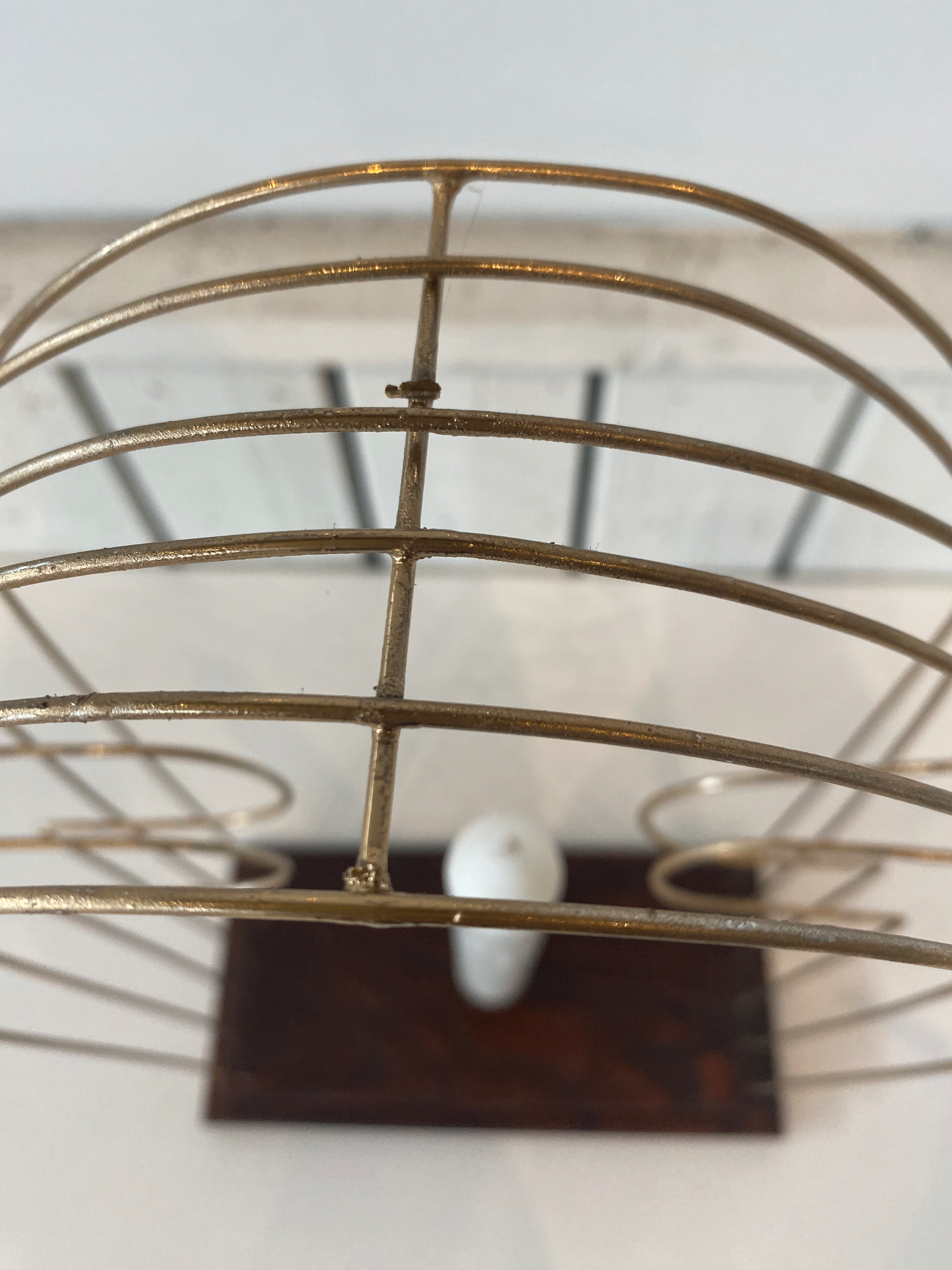
We began by preparing and staining the stepped plywood base before positioning the candle holder in the centre. The metal rods were then shaped and tested to create a symmetrical structure around the candle. The curved rods required repeated adjustments so that the two sides followed the same shape and met evenly at the top. The construction process helped us understand how small differences in angle and spacing can strongly affect the overall balance of a product.
Final outcome
The final result is a freestanding candle holder with a dark stepped wooden base and a symmetrical aluminium frame surrounding the candle.
The curved metal lines create a decorative structure without fully enclosing the flame. When the candle is lit, the frame also produces shadows that extend the pattern beyond the product itself.
Construction process gallery
Key learnings
- Historical design styles can be translated into new products without copying a specific object.
- Collaborating throughout the design process strengthened our ability to discuss, evaluate and refine design decisions together.
- Working with a historical design movement taught us how to reinterpret visual characteristics rather than copying existing products.