Product Design · Interaction · CAD
Dome Remote
A circular remote control concept that challenges the traditional flat format through a compact dome shaped form, physical buttons and a separate storage base.
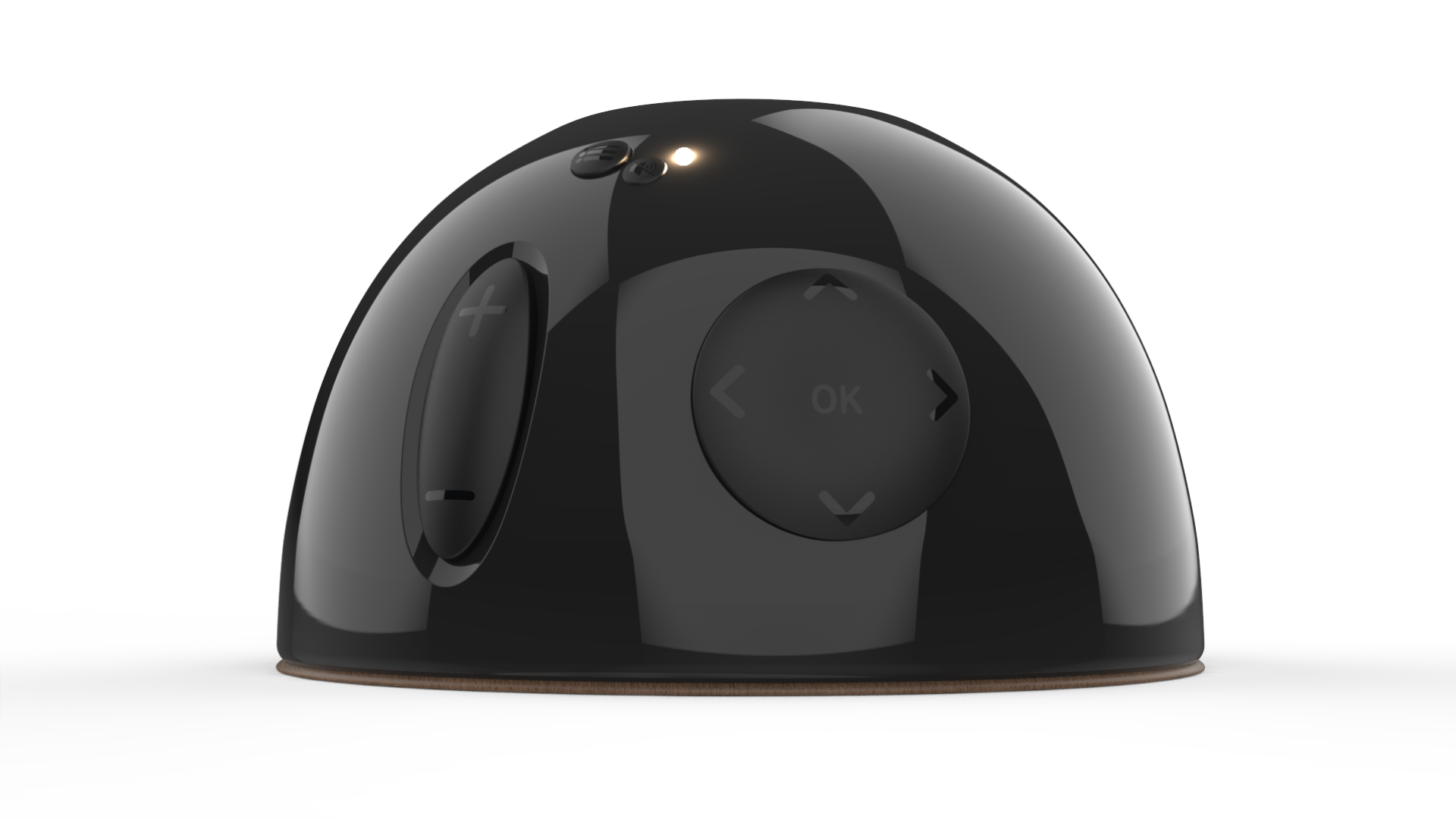
Final remote control concept with a compact dome shape and clearly grouped physical buttons.
- Project type
- Product Design · Interaction · CAD
- Course
- Form Design
- Year of study
- Year 4 of 5
- Duration
- Team
- Individual project based on a shared group design brief
- My role
- Visual research, design brief development, ideation, form development, CAD modelling and rendering
- Tools & methods
- PPE framework · Moodboards · Product positioning · Sketching · Form exploration · Alias modelling · KeyShot rendering and visualisation · Circular design
- Prototype
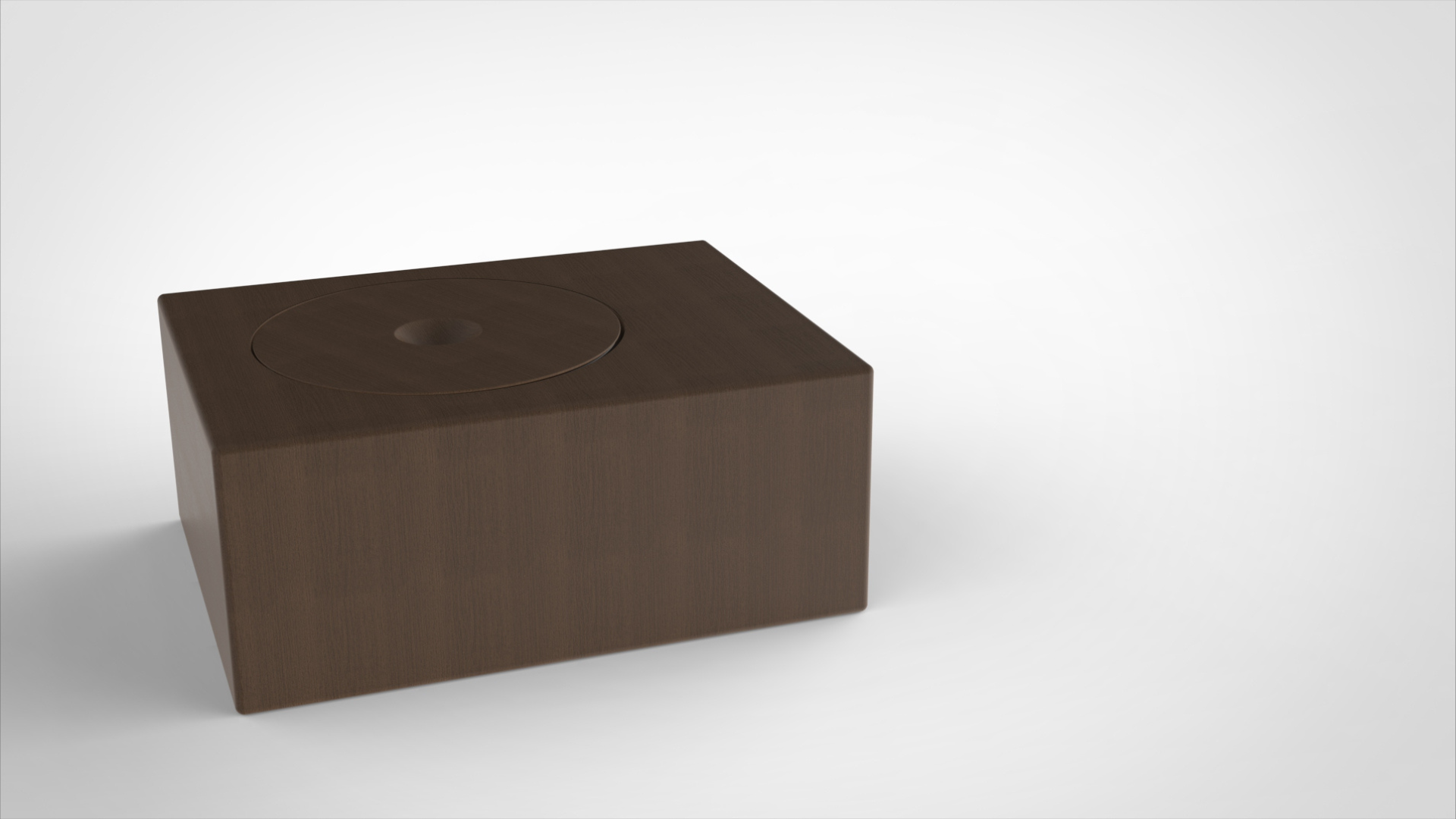
- Modular remote control with a separate wooden storage base
The challenge
The course brief was to develop a home electronics product with a clear physical interaction, several materials and components, and a distinctive form. The product also needed to apply circular design principles. Our group selected the remote control as the product category. I then developed my own individual concept and wanted to challenge the familiar long and flat remote control format with a more compact and unexpected shape.
Experience research and design direction
In previous projects, we had always been required to create a persona based on someone other than ourselves, either a fictional person or an external user. This was the first time we were allowed to choose ourselves as the primary persona, which is why I decided to design the remote around my own needs and everyday frustrations.
One of those frustrations was that remote controls are usually hidden away because they do not fit into the surrounding interior. I wanted to design a remote that could remain visible as part of the interior instead of being tucked out of sight.
The early research used the PPE framework to explore how the product should be experienced. The two main priorities were appreciation and comprehension.
For appreciation, I wanted the product to feel futuristic, exclusive and quietly elegant. The visual direction used a glossy black surface, soft transitions, rounded forms and a contrast with dark wood.
For comprehension, the buttons needed to feel familiar and understandable. Universal symbols and physical buttons were used so that the main functions could be recognised without additional explanation.
Visual research for appreciation, exploring futuristic forms, glossy surfaces and contrasting materials.
01 / 04
Ideation and form development
I began by exploring different remote control formats and found it difficult to move away from the familiar flat rectangular shape. This led me to investigate a rounder and more sculptural direction.
The selected concept developed into a symmetrical dome with a continuous outer surface. The buttons were organised into clear functional areas, with volume on one side and navigation on the other.
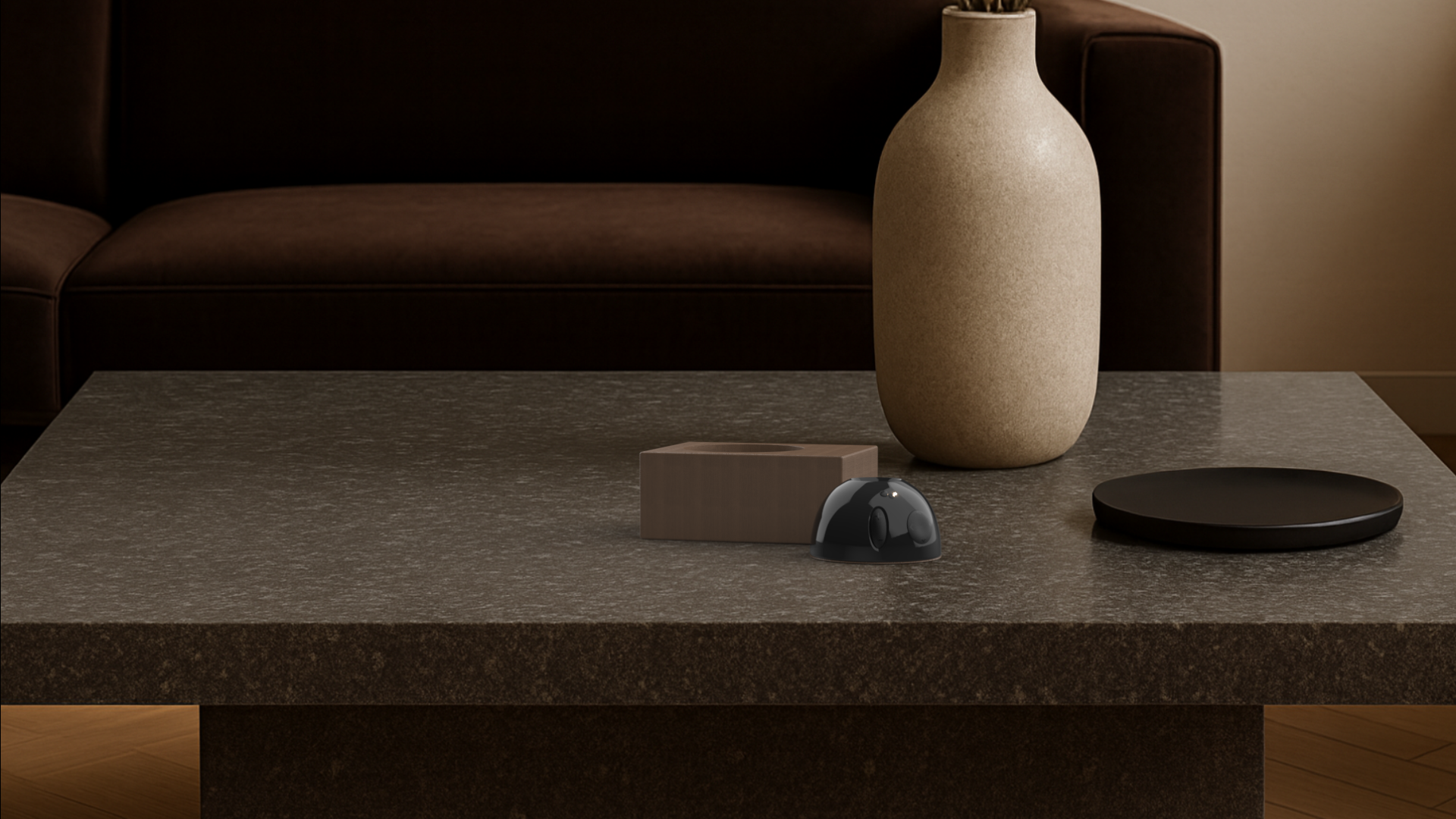
A separate wooden base was introduced as a place to store the remote control when it was not being used. This made the product feel more like a considered object within the home rather than something that needed to be hidden.
The storage base was designed to become part of the interior. When the remote is placed inside, the object functions as a decorative piece that can remain visible on a coffee table instead of being hidden away.
The dome shape was also intended to support interaction. The flat underside was designed to remain stable in the hand while the outer shell could be rotated, bringing different button groups into reach without changing grip. Although this rotational mechanism was not fully developed in the CAD model, it remained an important part of the original concept.
An early concept also explored a spring loaded mechanism that would gently lift the remote when pressed, making it easier to pick up. Although it was not developed in the final CAD model, it remained part of the design intention.
Interaction and buttons
The front of the remote includes a vertical volume button and a circular navigation button with directional buttons and confirmation in the centre. Smaller buttons provide access to the menu and sound.
The back includes the power button and an additional function button. The buttons use familiar symbols so that the interaction remains recognisable even though the overall form is unconventional.
Front buttons grouped by function for clear physical interaction.
01 / 02
Circular construction
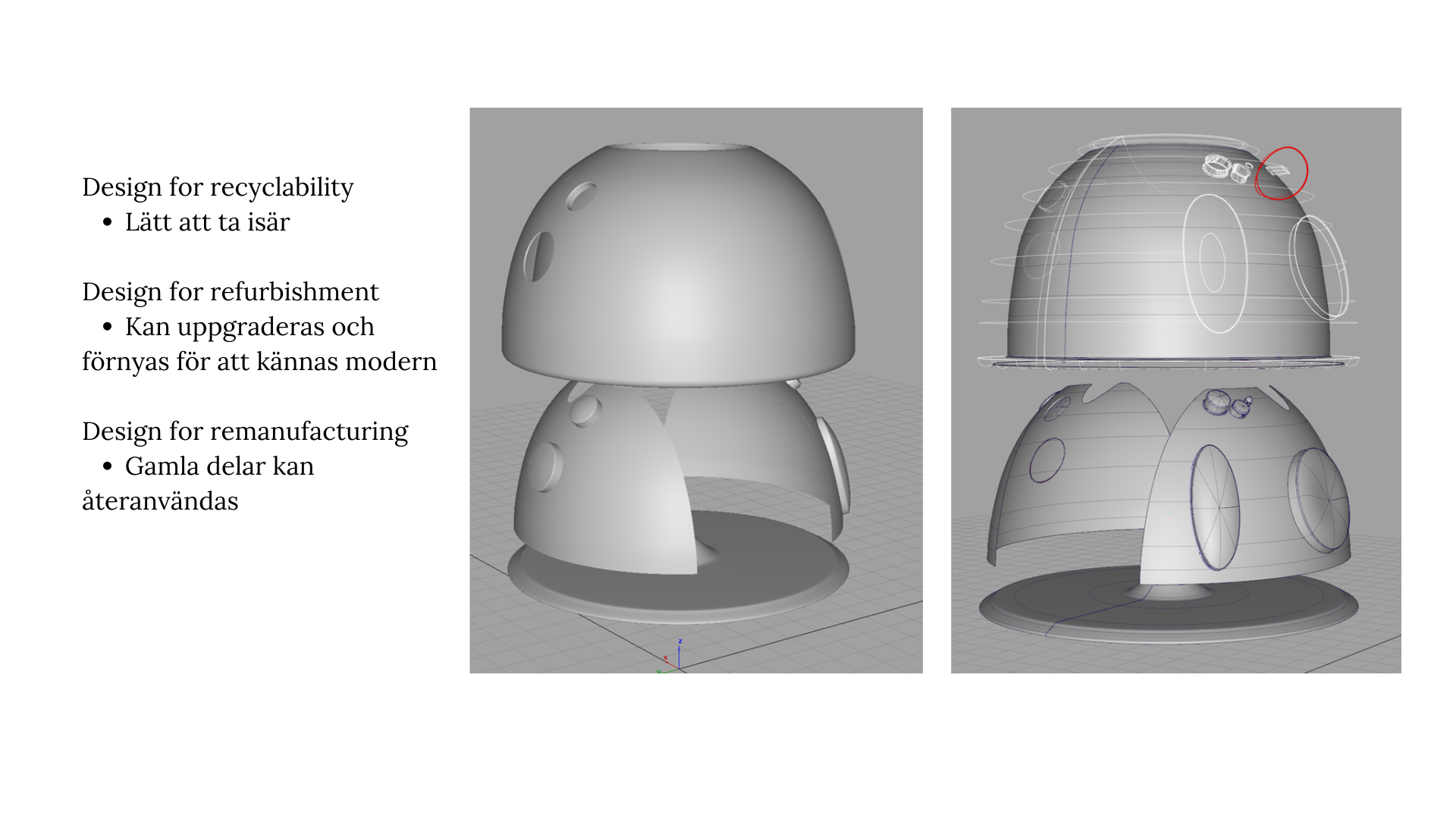
The remote was designed as a modular product that could be opened and separated into different layers. The outer shell, inner shell, silicone button layer and wooden underside were treated as separate components.
The removable underside provides access to the internal parts, while the silicone button layer could be replaced to repair, update or personalise the product. Separating the materials would also make the product easier to refurbish, remanufacture and recycle.
Materials and manufacturing
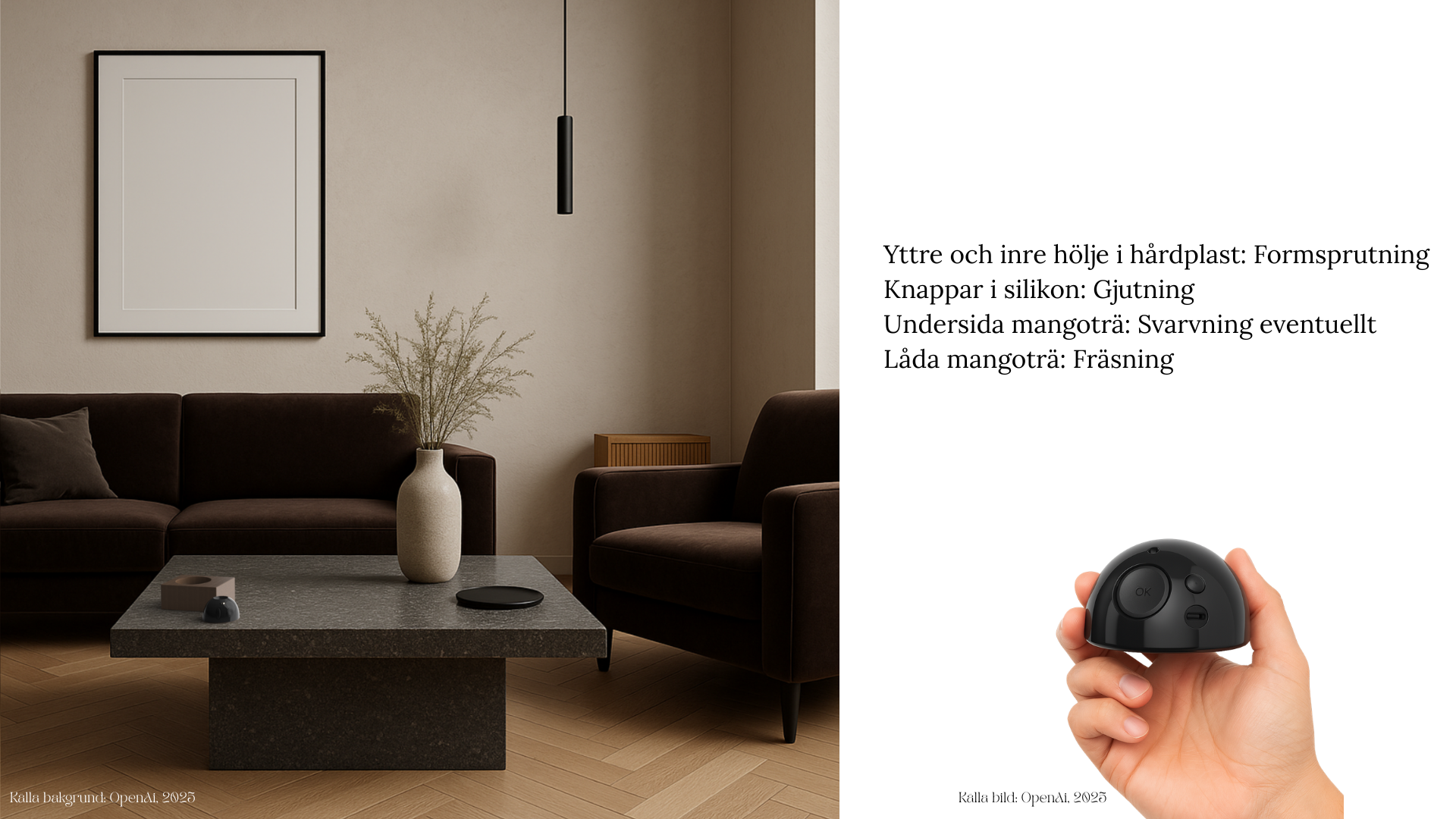
The proposed outer and inner shells would be made from rigid plastic through vacuum forming. The buttons and button layer would be cast in silicone.
The underside and storage base were proposed in mango wood. The wood creates a warmer contrast with the glossy black shell and gives the concept a more lasting domestic character.
Final outcome
The final concept is a compact dome shaped remote control with a glossy black shell, tactile physical buttons and a wooden underside. Its rounded form challenges the standard remote control format while keeping the main interactions familiar.
The separate wooden base gives the remote control a defined place in the home. The modular construction allows individual components to be accessed, replaced or reused instead of treating the entire product as a single disposable unit.
Key learnings
- I learned that questioning familiar product conventions can reveal new possibilities for form, interaction and everyday use.
- A familiar interaction can remain understandable even when the overall product form is unconventional.
- Experience goals can guide decisions about form, buttons, materials and surface finish.
- Modular construction can support repair, refurbishment and the reuse of components.