Industrial Design · Freeform Surface Modelling · Product Visualisation
EV Charger Concept
A wall mounted electric vehicle charger concept exploring how a technical product can become a natural part of the home.
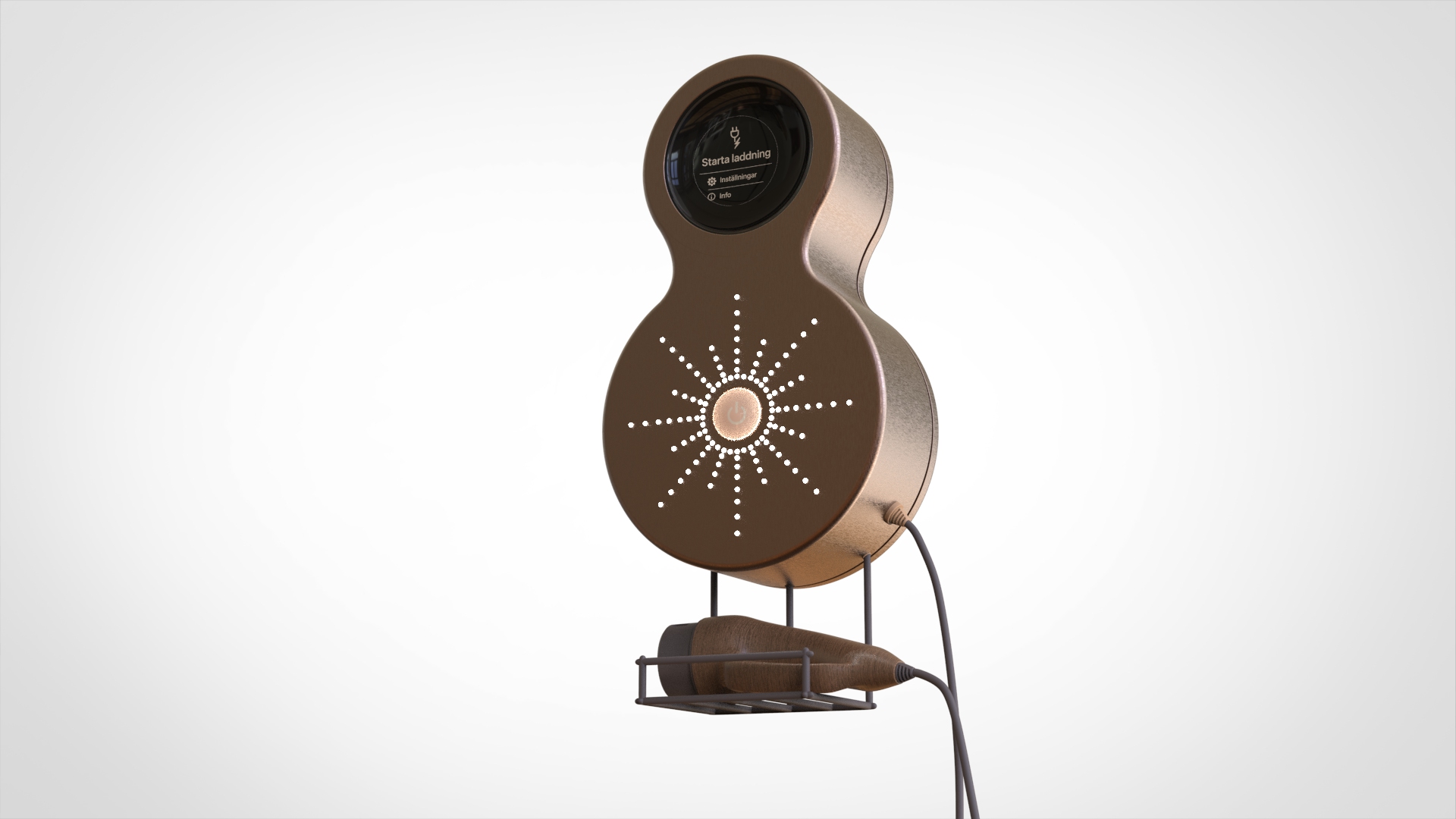
Full product render showing the display, illuminated interface and integrated connector holder.
- Project type
- Industrial Design · Freeform Surface Modelling · Product Visualisation
- Course
- Computer Aided Industrial Design
- Year of study
- Year 4 of 5
- Duration
- Team
- Individual project
- My role
- Concept development, industrial design, form development, freeform surface modelling, interface design, material exploration, CAD modelling in Autodesk Alias, KeyShot rendering and visualisation
- Tools & methods
- Autodesk Alias · KeyShot
Design goal
Rather than approaching the charger as a purely technical product, I wanted it to feel like a considered part of the home.
Most residential chargers are designed as functional utility products. For this concept, I explored whether softer proportions, warm materials and a sculptural silhouette could create something that integrates more naturally into a residential environment instead of standing out from it.
The ambition was to design a charger that people would not feel the need to hide.
Exploring alternative directions
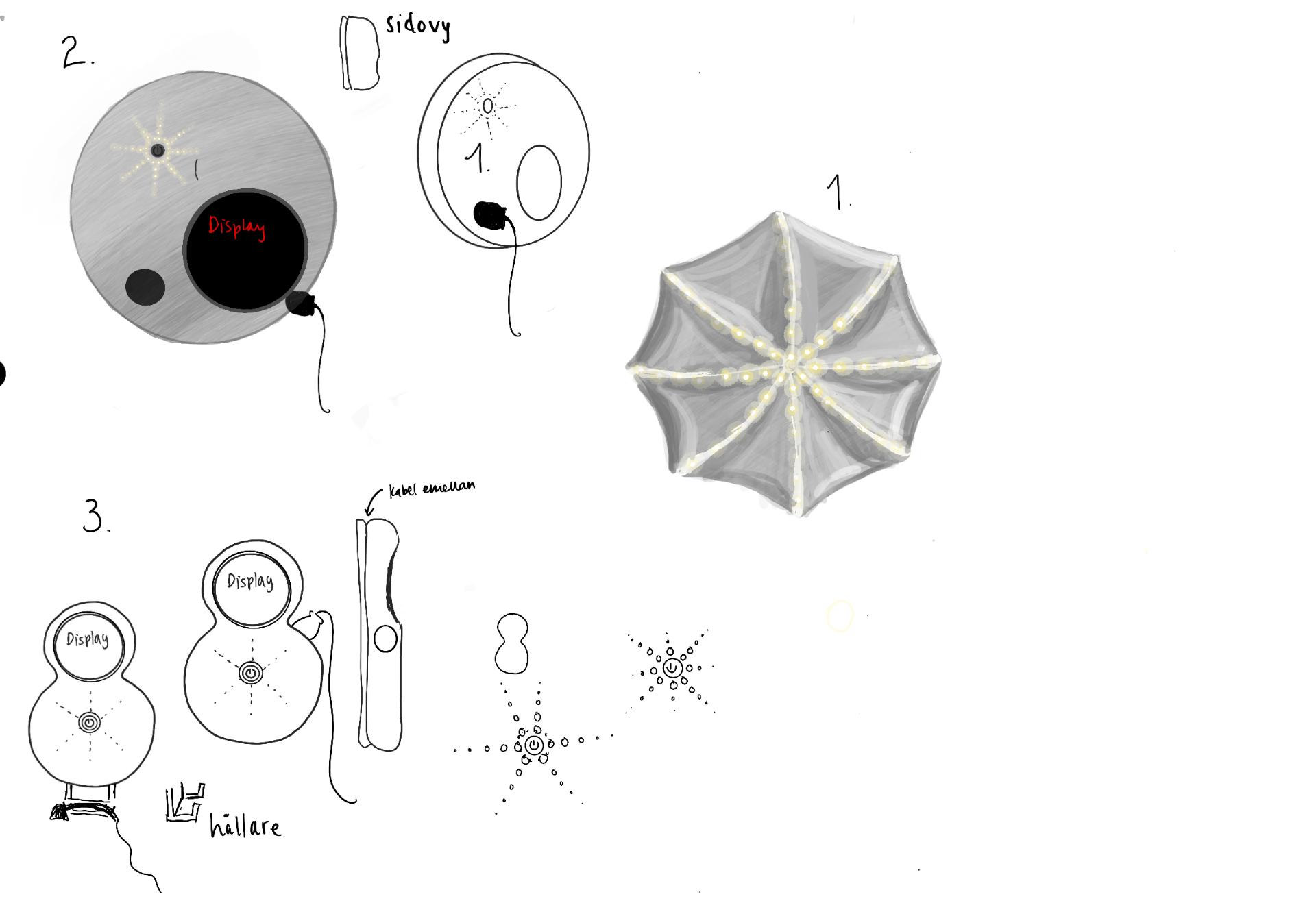
Before developing the final concept, I explored several alternative directions through quick digital sketches.
The sketches investigate different overall proportions, interface placements and lighting arrangements. They also helped establish the relationship between the digital display, physical button and visible charging feedback.
Rather than refining individual details, the sketches were used to compare different visual directions before selecting one concept to develop further in Autodesk Alias.
The radial light pattern appeared early in the concept phase and remained a defining feature throughout the project.
Form development
The overall form is built around two connected circular volumes.
The upper section houses the digital interface while the lower section becomes the main interaction area through the physical button and illuminated charging feedback.
This separation creates a clear functional hierarchy while allowing the product to read as one continuous object.
The geometry was developed using freeform surface modelling in Autodesk Alias, where smooth transitions and generous radii were used to create a softer visual expression than conventional charger enclosures.
Interface and interaction
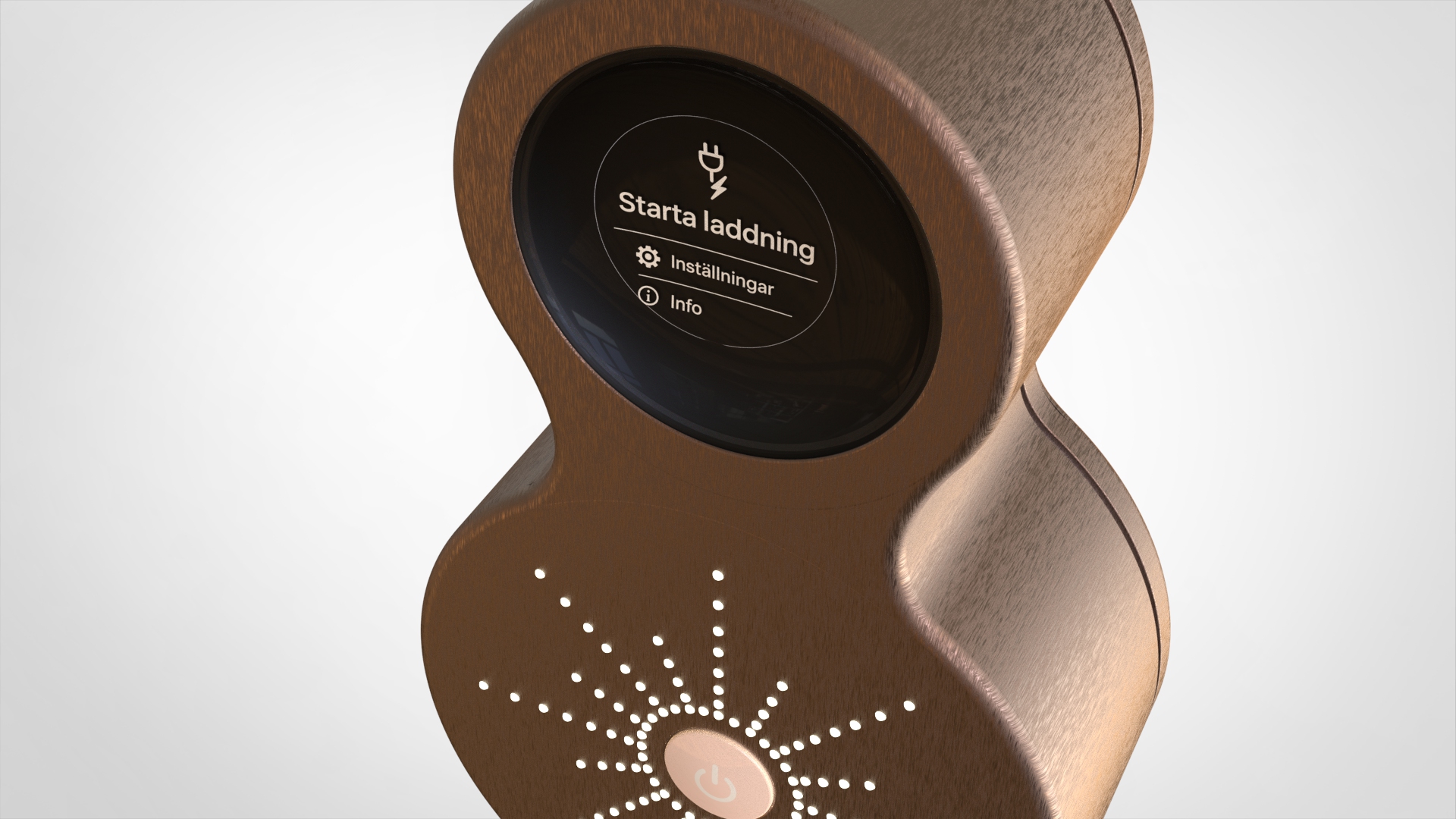
The charger combines a circular digital display, a central physical button and illuminated charging feedback within one integrated interaction area.
The slightly concave display follows the surrounding geometry and presents charging information and settings without appearing as a separate screen placed onto the product. Directly beneath it, a physical button provides a clear way to start and stop charging.
A radial light pattern around the button communicates charging progress without requiring users to rely solely on the display. It moves from red towards green during charging and becomes steady green when charging is complete. When the charger is not in use, the same light can function as warm ambient wall lighting.

A connected system
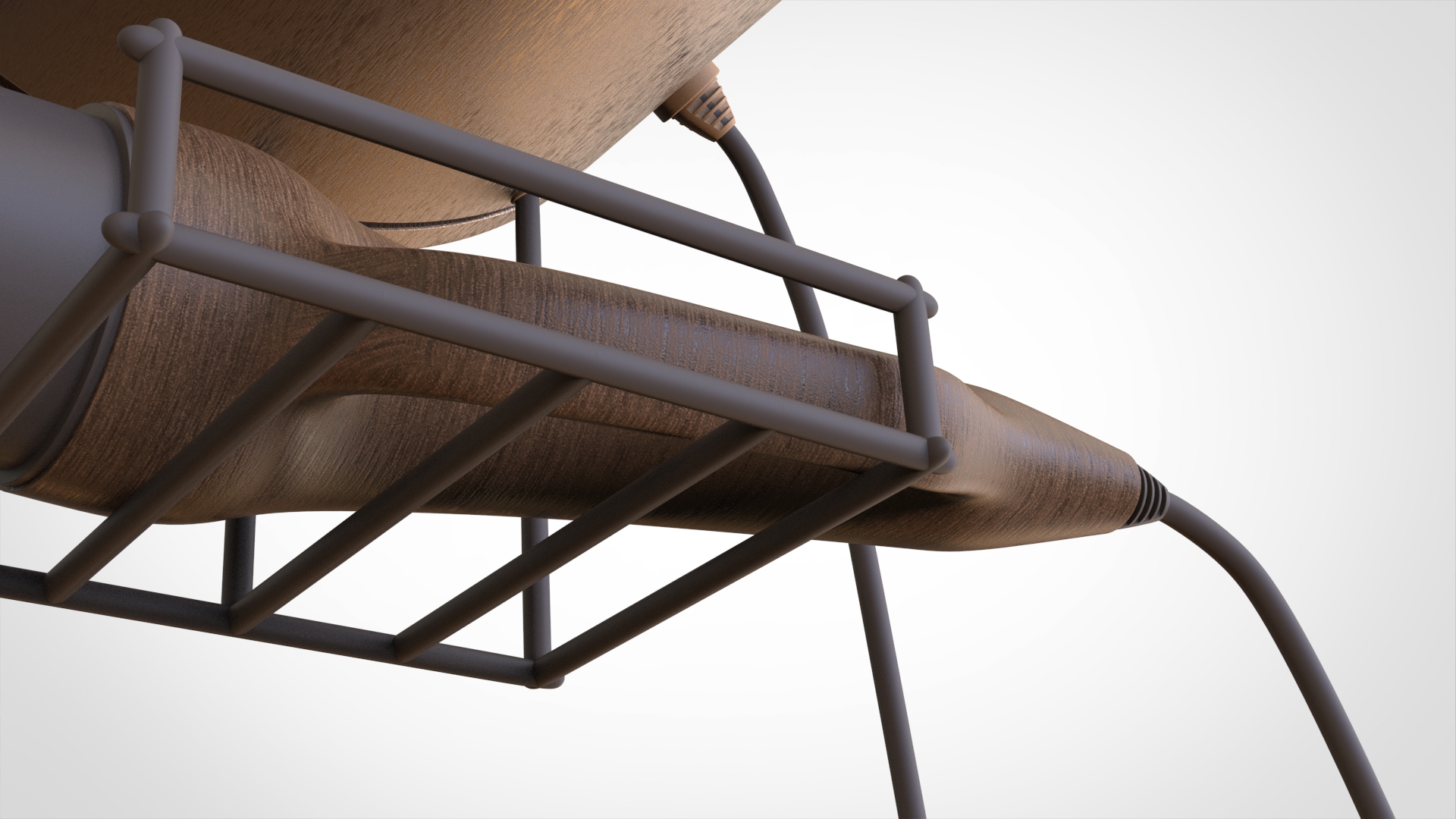
The charging connector is stored in a dedicated wall mounted holder.
Rather than designing the holder as a separate accessory, it was developed using the same soft geometry and proportions as the charger itself.
This creates a consistent visual language across the complete charging system.
Materials
Warm beige and brown tones were selected to create a calmer visual appearance than the black plastic surfaces commonly associated with charging equipment.
Contrasting materials separate the display, illuminated interface and enclosure while maintaining a cohesive overall expression.
Visible split lines communicate how the product could be manufactured while reinforcing the transition between functional components.
Visualisation
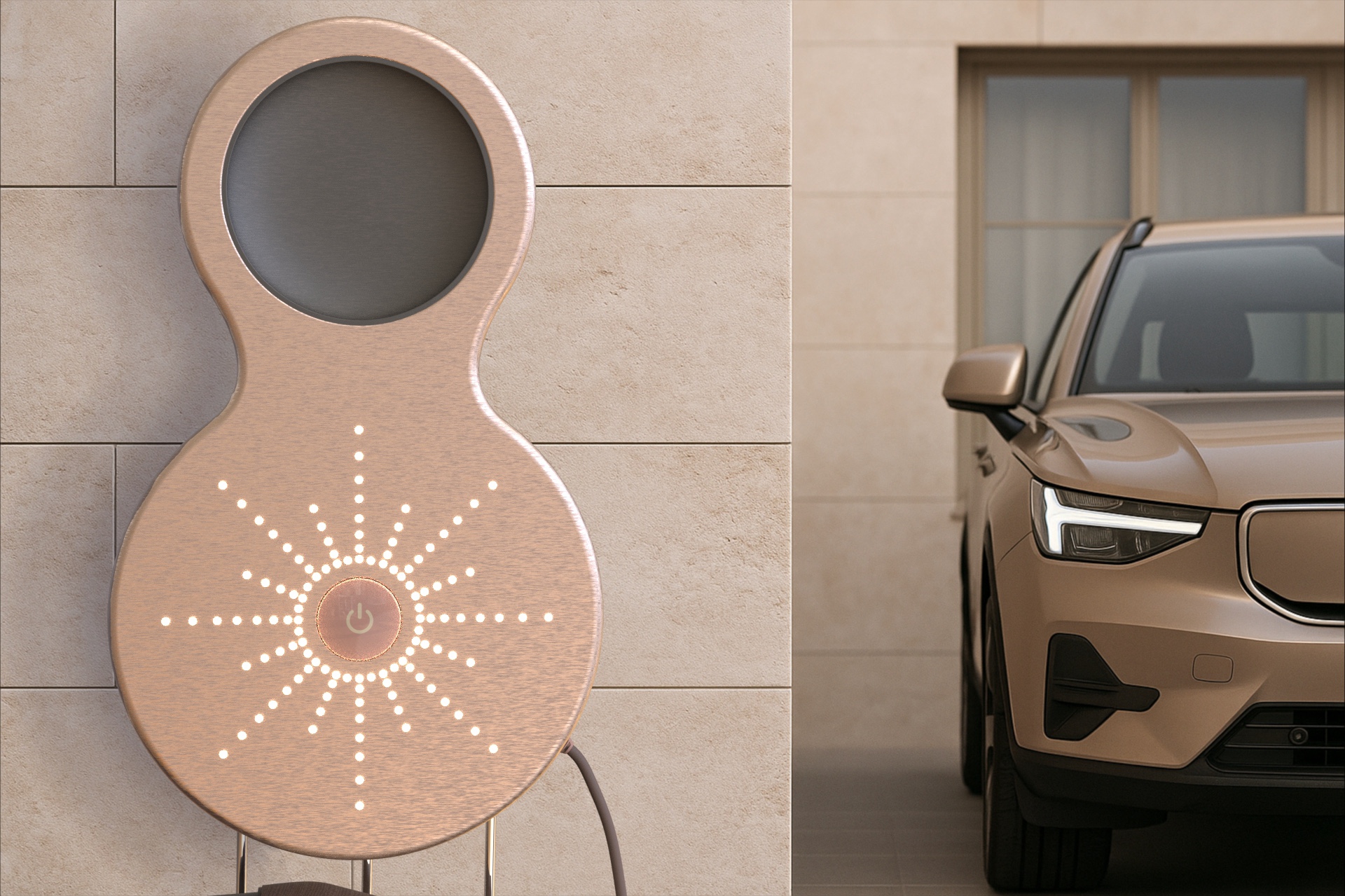
After completing the CAD model in Autodesk Alias, the product was rendered in KeyShot to explore materials, lighting and environmental context.
The studio renders communicate the geometry and product details, while the contextual visualisations demonstrate how the charger could integrate into a residential environment without dominating the space.
Final outcome
The final concept combines a digital interface, physical interaction, visible charging feedback and integrated connector storage within one coherent product.
By softening both the geometry and material expression, the project explores an alternative direction for residential charging equipment where functionality and interior aesthetics become equally important.
Key learnings
- Freeform surface modelling allowed me to explore how complex geometry can communicate softness while remaining functional.
- Designing the interaction around both physical controls and light strengthened my understanding of layered user interaction.
- The project demonstrated how lighting can communicate product status while simultaneously becoming part of the product's identity.
- Developing the charger and holder together reinforced the importance of maintaining a consistent design language across related products.
- Rendering the concept in KeyShot highlighted how materials, lighting and context influence the perception of industrial products.