Sustainable Design · Product Development
LTU Bottle Redesign
An LTU merchandise bottle redesigned for longer use, easier everyday handling and a more sustainable product life cycle.
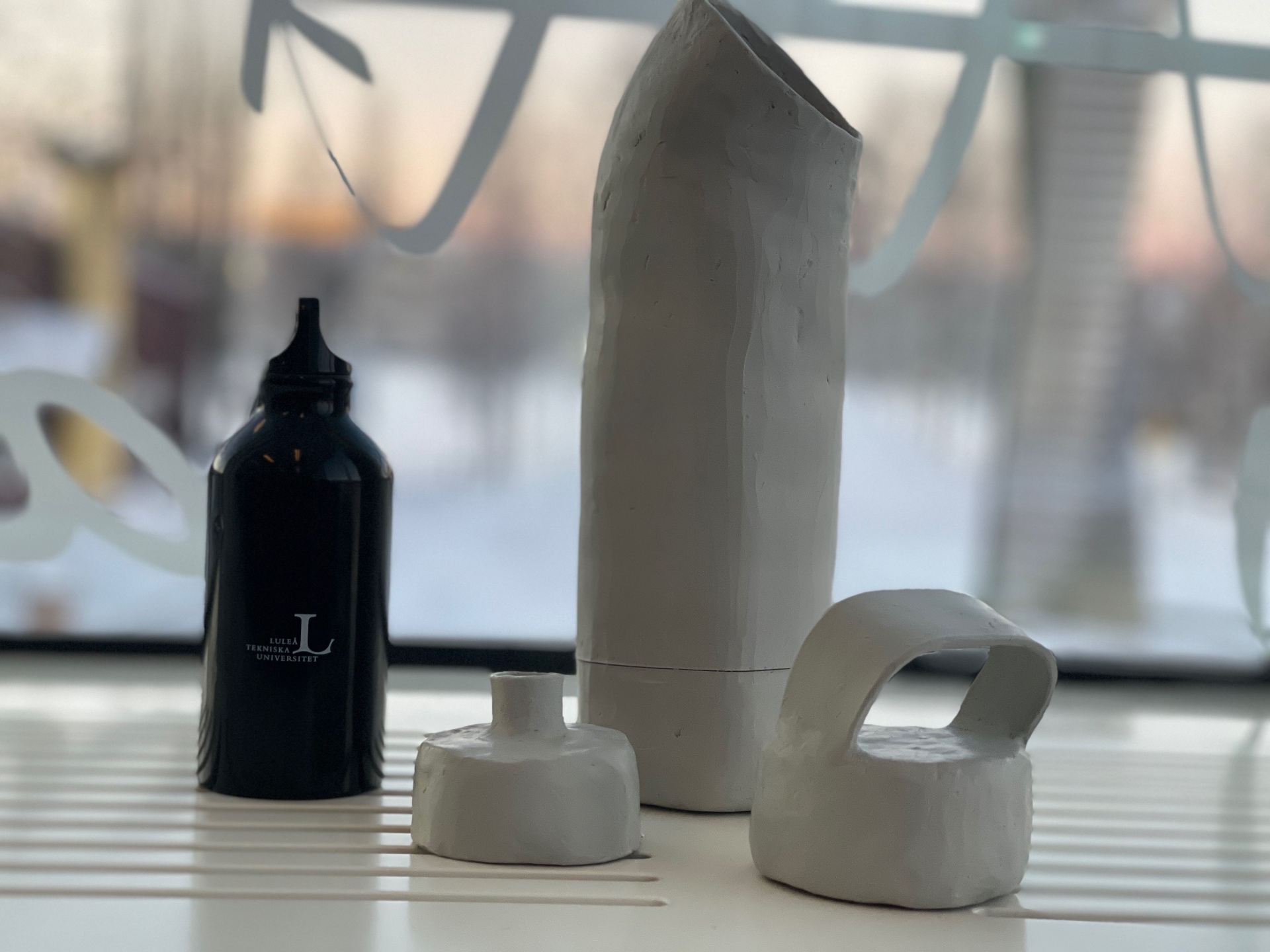
Final clay prototype shown beside the original LTU merchandise bottle.
- Project type
- Sustainable Design · Product Development
- Course
- Design Process and Method
- One of several projects completed during the course.
- Year of study
- Year 1 of 5
- Duration
- Team
- Team of four
- My role
- Research, idea generation, sustainability analysis and concept development
- Tools & methods
- Research · Benchmarking · Survey · Braindrawing · SCAMPER · Prototyping · Life cycle analysis
- Prototype
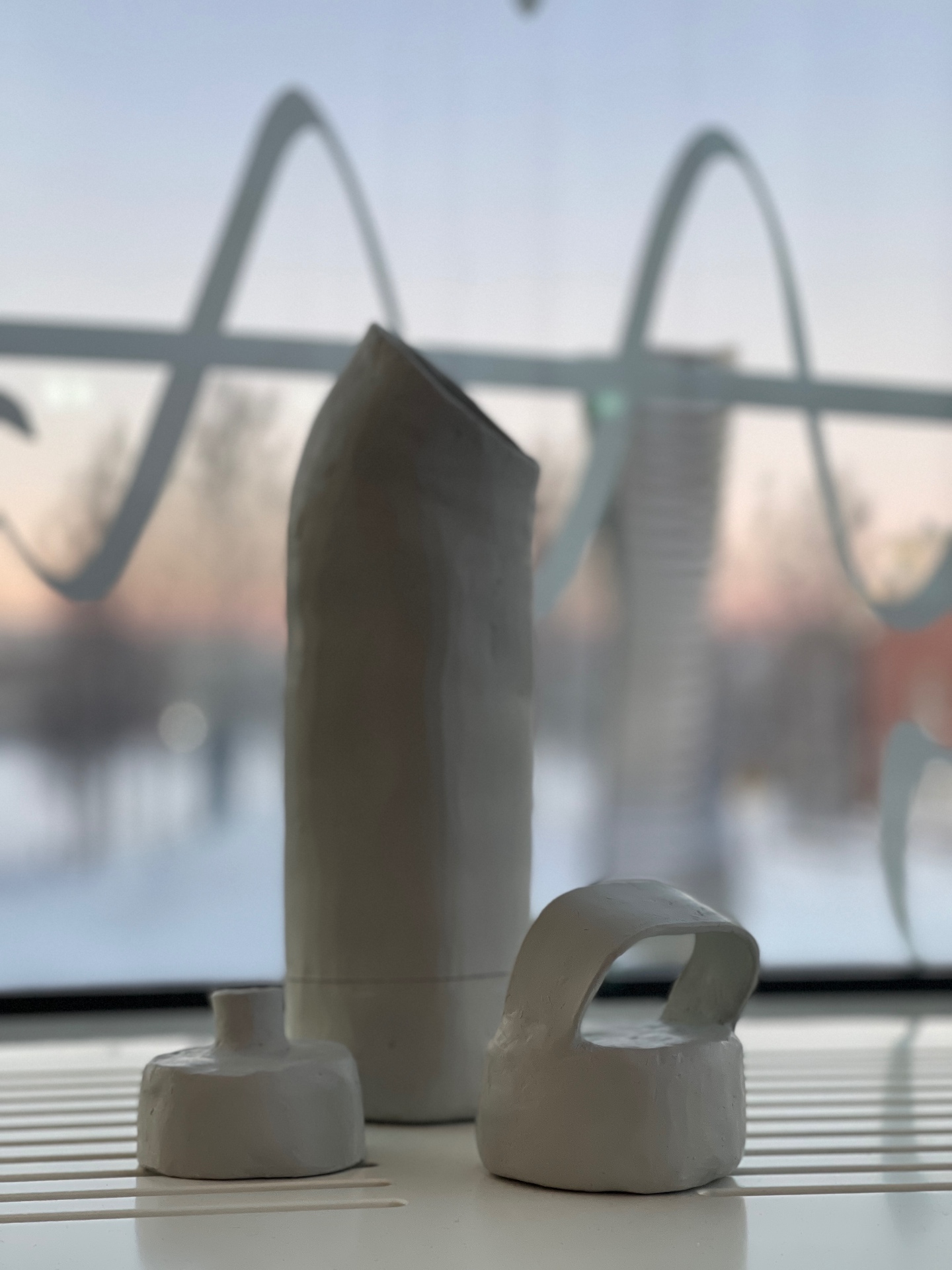
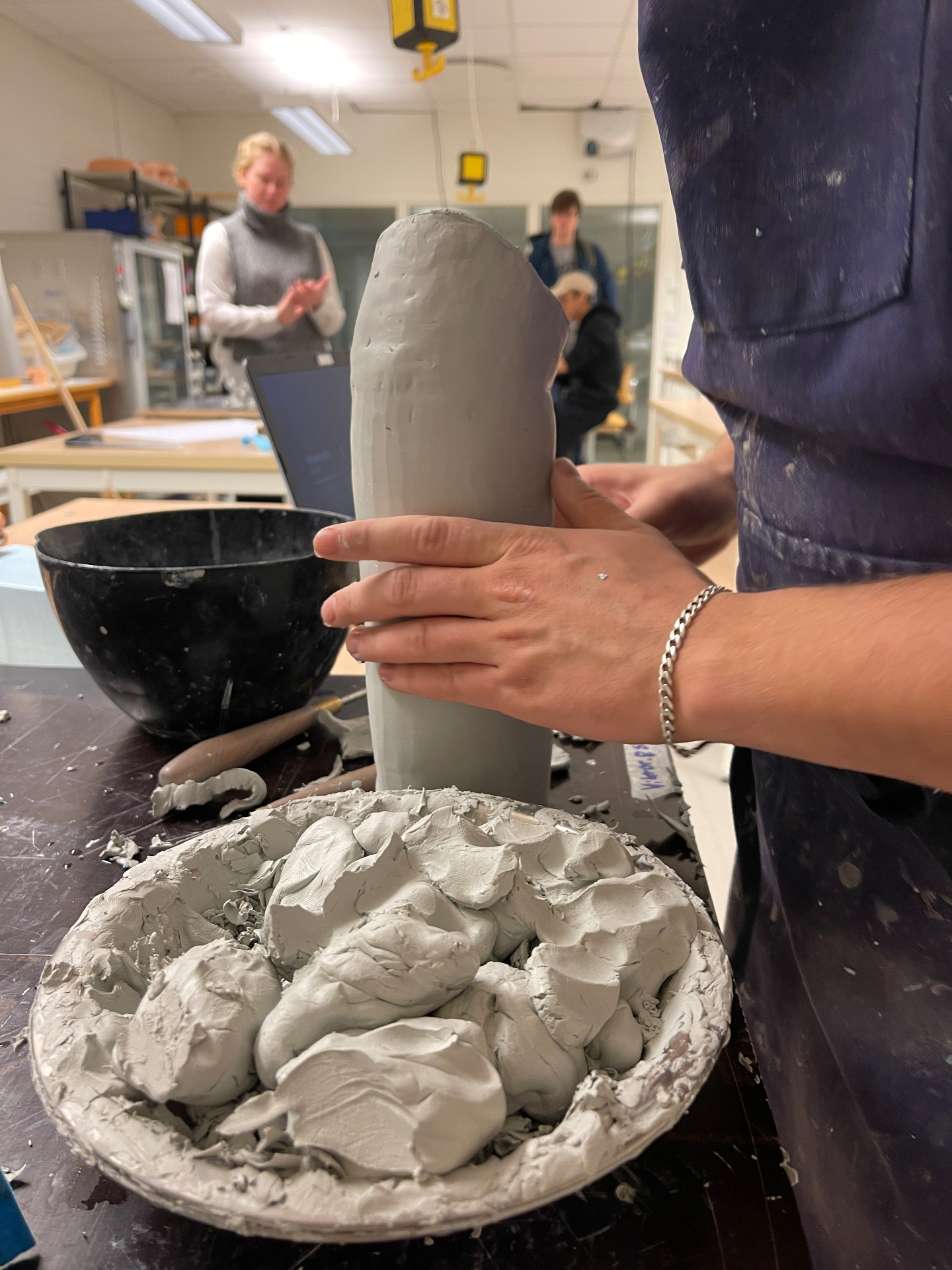
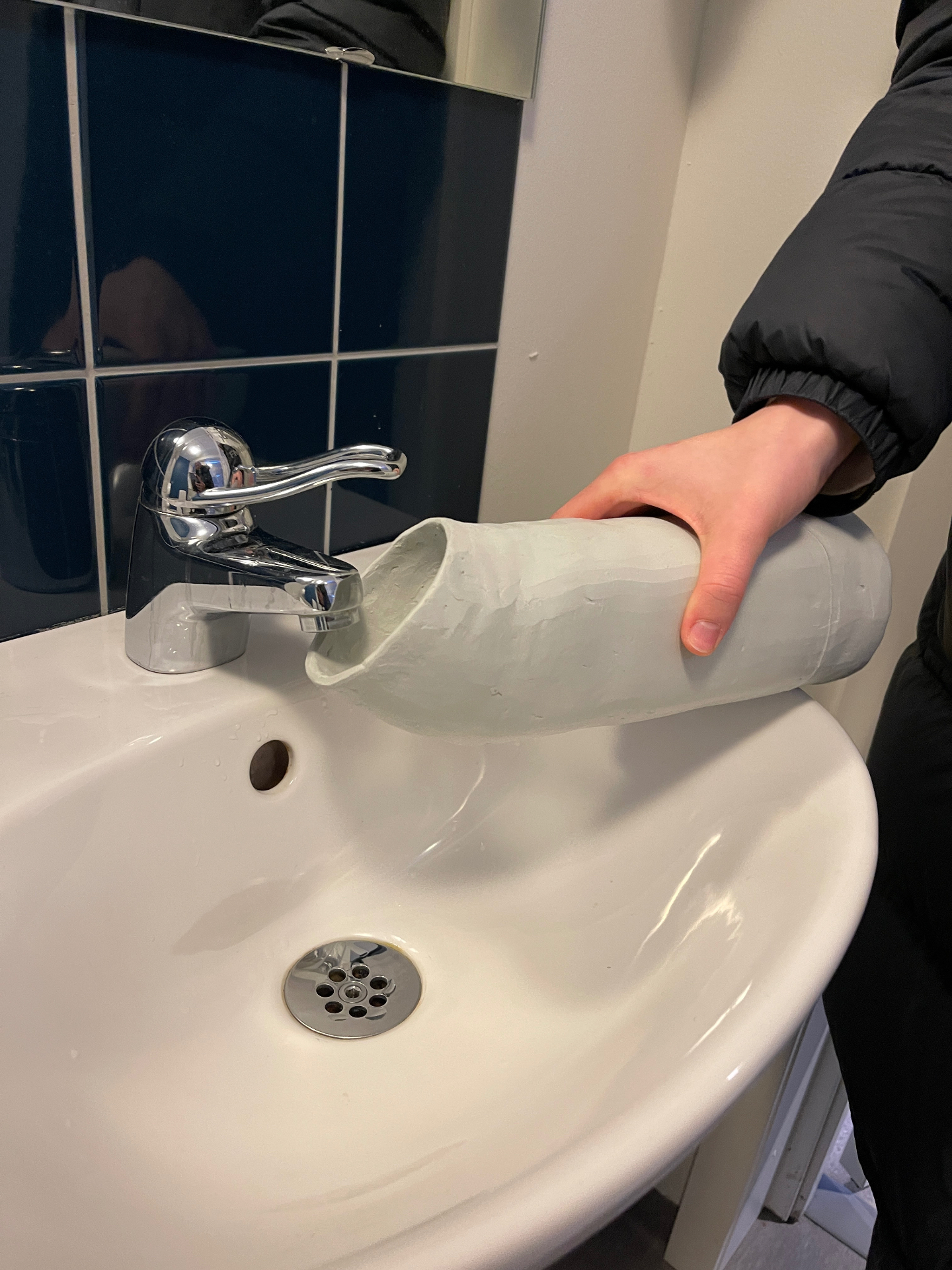
- Final concept prototype made from reusable modelling clay
The challenge
LTU asked us to review one of its merchandise products and redesign it from a broader sustainability perspective. We chose a small aluminium bottle and considered material, production, transport, use, durability, reuse and what happens at the end of the product’s life.
Research & insights
We analysed the existing bottle across its product life cycle and compared different bottles, materials and existing solutions. A survey helped us understand what users valued most. Material, size and a secure screw cap were important, and most respondents preferred a metal bottle with a capacity between 0.5 and 1 litre.
Design process
- 1
Analysing the existing bottle and its product life cycle
- 2
Researching and comparing materials and existing products
- 3
Surveying user preferences
- 4
Developing ideas through braindrawing and SCAMPER
- 5
Building the final concept prototype in reusable modelling clay
Final outcome
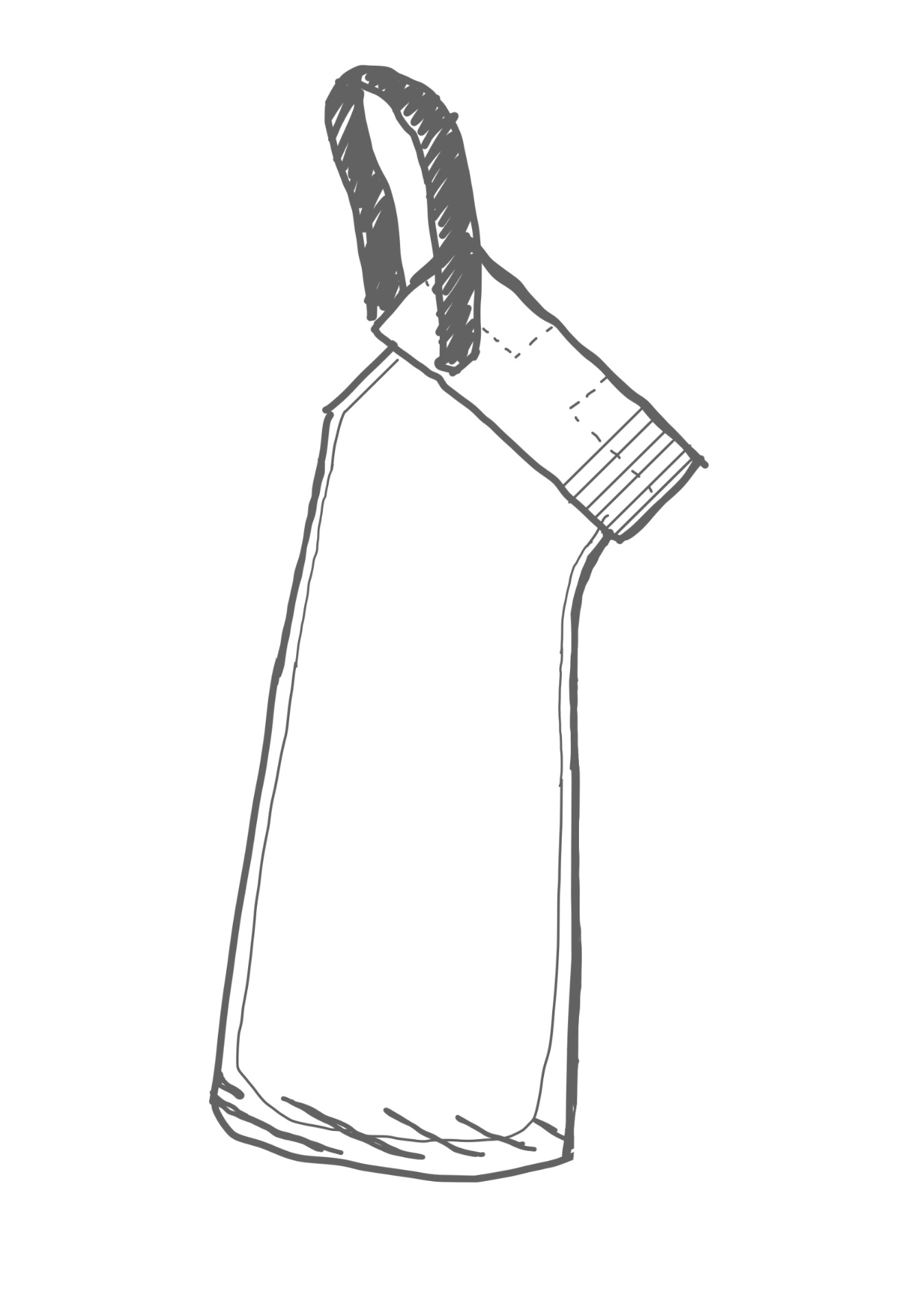
We developed a larger insulated bottle intended to be made mainly from recycled stainless steel, with a lid made from biodegradable plastic. It has a wider opening for easier filling, improved durability and separate components that can be changed or personalised. The bottle was designed for both hot and cold drinks so that it could be useful in more situations and remain in use for longer.
The final prototype was made from reusable modelling clay as part of the course. It represents the final shape, size and separate components of the concept, but not the intended production materials.
Key learnings
- Sustainability involves the full product life cycle, not only the material.
- A product that works in more situations has a better chance of staying in use.
- User preferences and environmental goals need to be considered together.