Light Design · Material Exploration
Woven Light
A hanging lamp made from branches, string and paper, developed through collaborative sketching and hands on material exploration.
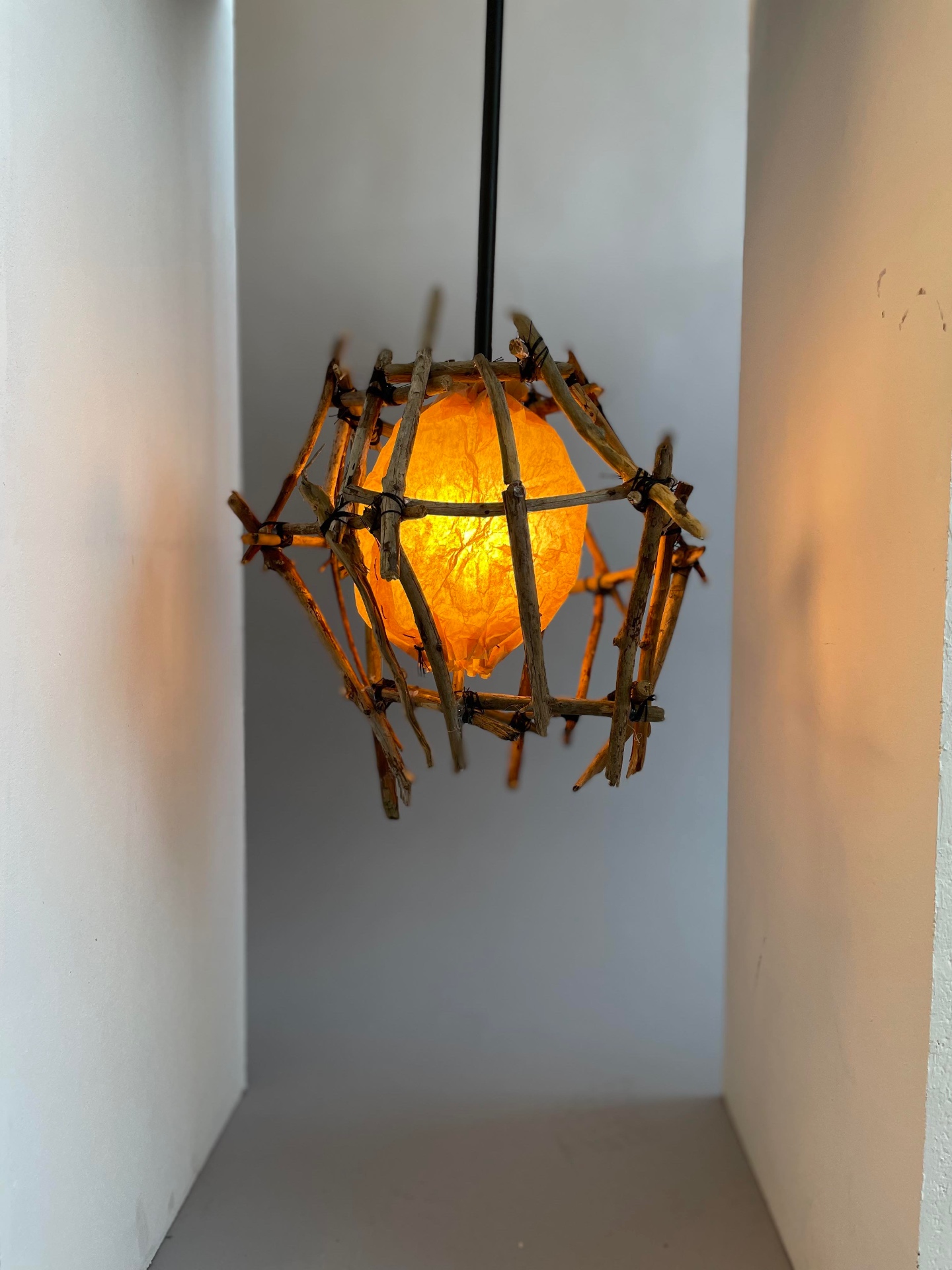
Final hanging lamp combining branches, string and paper to create a warm light.
- Project type
- Light Design · Material Exploration
- Course
- Design: Theory and Practice
- Year of study
- Year 2 of 5
- Duration
- Team
- Team of four
- My role
- Ideation, concept development, material exploration and construction
- Tools & methods
- Thumbnail sketching · 3D form studies · Material exploration · Physical prototyping · Collaborative design
- Prototype
- Full scale hanging lamp made from branches, string and paper
The challenge
The task was to design and build an electric lamp through a short collaborative workshop. We each began by sketching individual ideas before building quick paper models to explore them in three dimensions. The concepts were then presented and discussed as a group before selecting one direction to develop further.
Developing a shared direction
Each group member began with their own sketches and ideas. Although some of the concepts had similarities, we also had different views of what the lamp should look like. We first tried to combine several ideas, but the result lacked a clear direction.
Material exploration
- 1
We chose branches from nature as the main structural material. Their irregular shapes gave the lamp an organic form and meant that the construction had to be developed directly through physical experimentation.
- 2
Paper was placed around the light source to diffuse the light. The intention was to create a warm glow that worked with the natural appearance of the branches.
- 3
The material palette was intentionally kept close to nature. The brown paper softens the light and creates a warm amber like glow, while the surrounding wooden elements reference the shapes and structure of trees. Together, the materials give the lamp a warm and natural expression.
Construction process
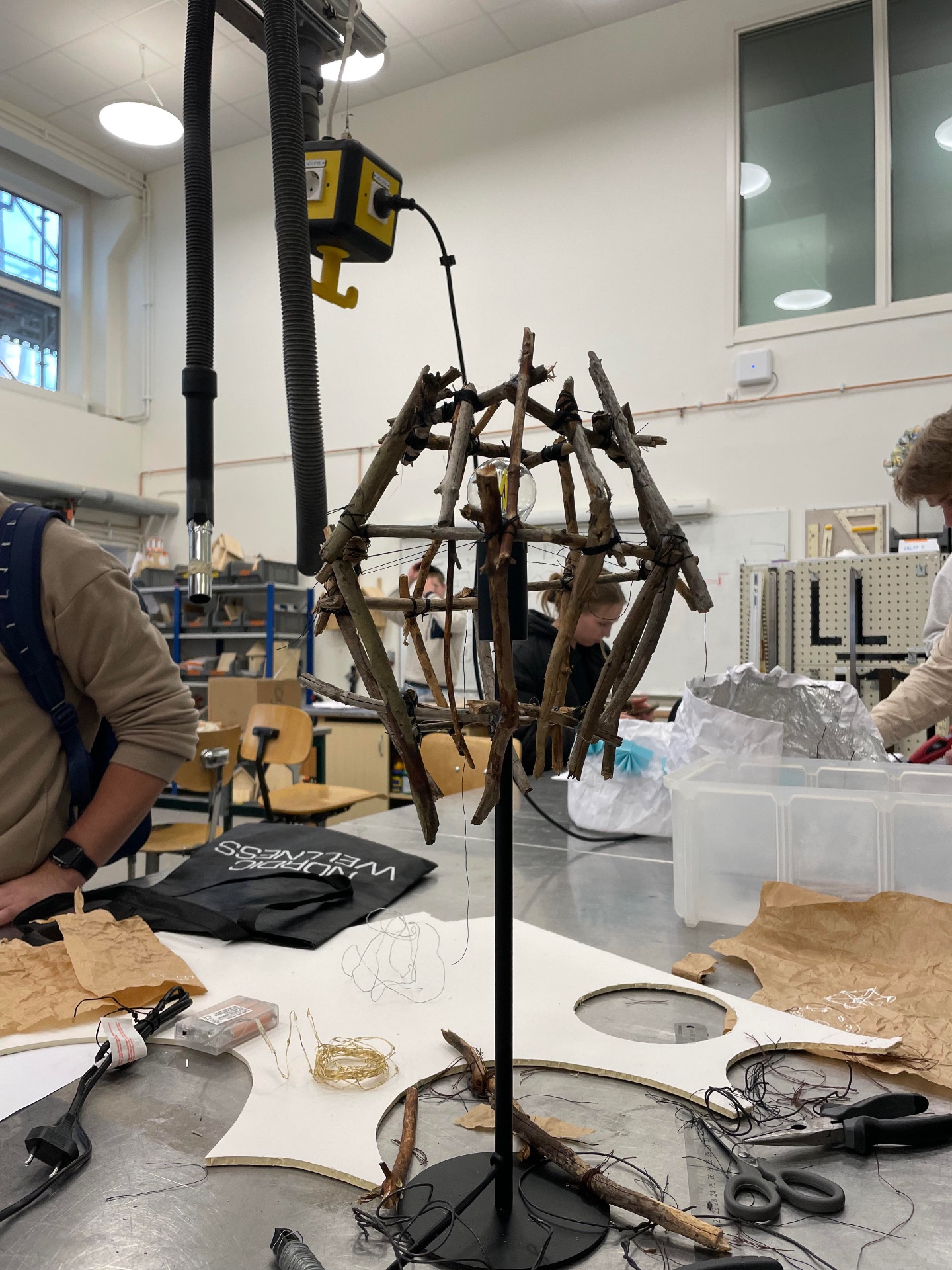
The lamp was developed directly in the workshop through repeated adjustments to the branch structure. Glue did not hold the branches together reliably, so string was wrapped around each point where the branches met. This solution became part of the visual expression as well as the construction. Building the frame required patience because each connection had to be secured individually.
Final outcome
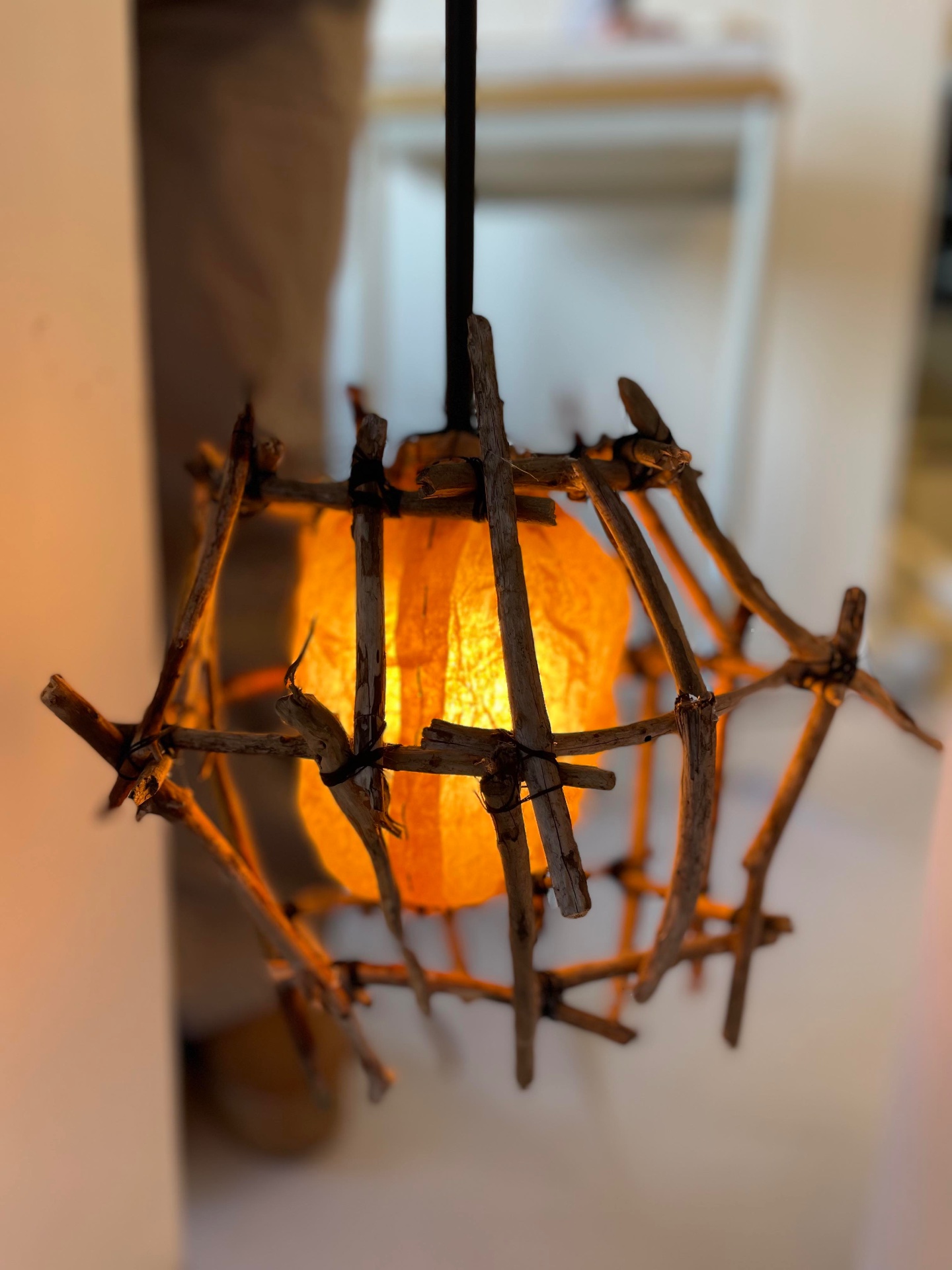
The final result is a hanging lamp built from branches connected with string. A paper form surrounds the light source and creates a warm contrast with the rough wooden structure.
The irregular construction gives each side of the lamp a different appearance. The project became an exploration of how simple natural materials can be transformed through light and assembly.
Key learnings
- Physical experimentation can reveal solutions that are difficult to predict through sketches alone.
- Material limitations can become part of a product’s visual identity.
- Collaborative design requires listening, compromise and a shared direction.